
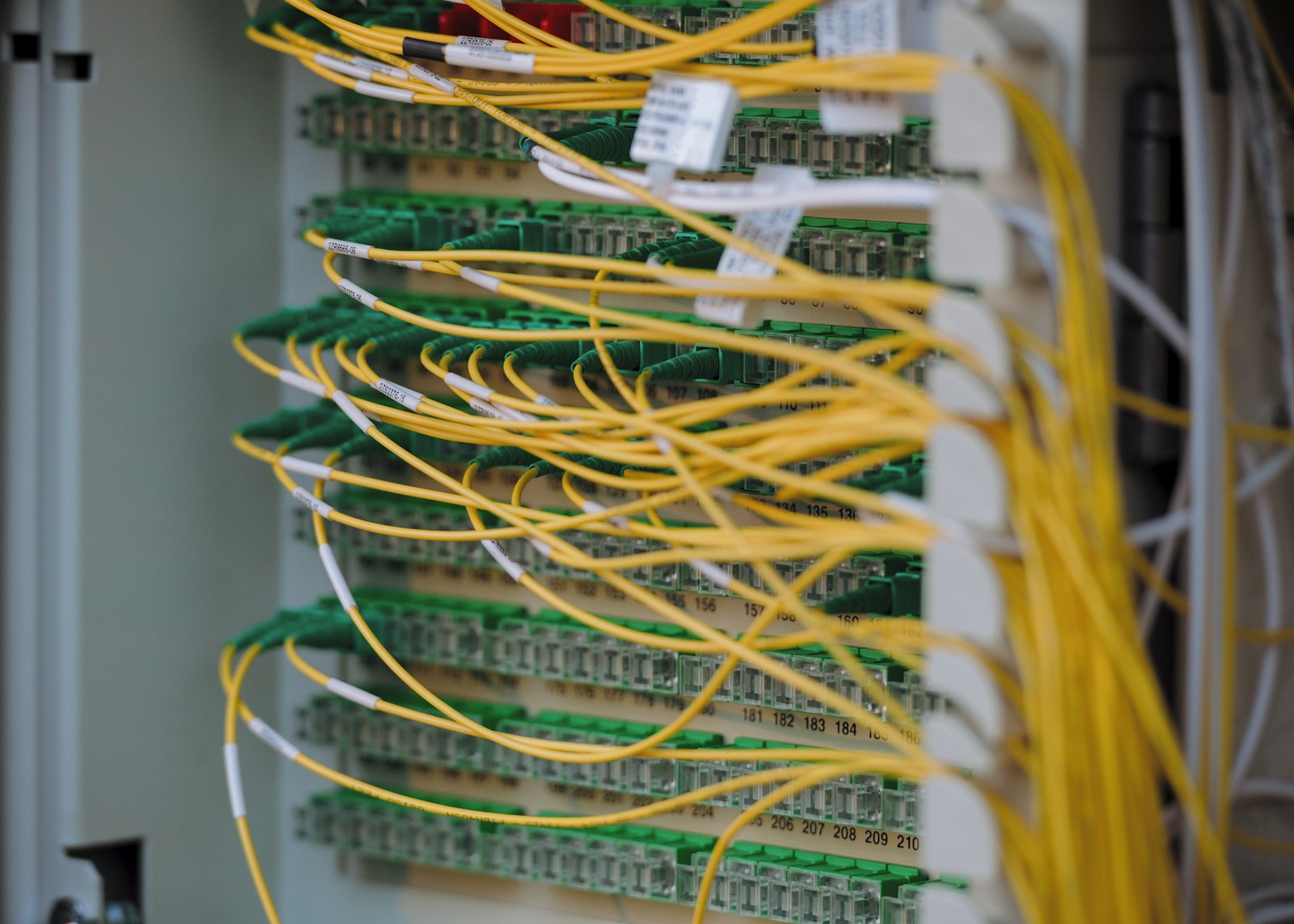
GAMP 5 is the most widely cited framework for computer system validation in the pharmaceutical industry. Published by ISPE (the International Society for Pharmaceutical Engineering), it gives you a risk-based approach to validating computerized systems used in GxP activities across drug substance, drug product, biologics, medical devices, and combination products. The second edition, published in July 2022, updated the framework to align with the FDA’s Computer Software Assurance thinking and to push back against the over-documentation that the first edition had unintentionally encouraged.
If you work in pharmaceutical quality, validation, IT, or device software, you need to understand GAMP 5: not just the acronym, but the framework’s actual logic and what it changes about how you approach validation. This article walks through the categories, the lifecycle, the test phases, supplier reliance, the roles, and the judgment calls that separate a defensible validation file from a stack of paper an inspector can pick apart. It also gives you the interview answers an inspector or a hiring manager will press on.
What GAMP 5 Actually Is
GAMP 5 is not a regulation. It is not FDA guidance. It is an industry good-practice framework published by a professional organization. That distinction matters: GAMP 5 compliance is not a legal requirement, but the principles it embodies (risk-based validation, documented evidence of fitness for intended use) map directly onto what regulators expect. When an FDA investigator or an EU GMP inspector reviews your validation, they will not ask “did you follow GAMP 5.” They will ask whether you can demonstrate the system does what it is supposed to do and that the data it produces can be trusted. GAMP 5 is a route to that demonstration, not the demonstration itself.
The document’s full title is “GAMP 5: A Risk-Based Approach to Compliant GxP Computerized Systems.” The phrase “risk-based” is the central idea. Not all systems carry the same risk. Not all validation activities need to be documented to the same depth. The framework gives you the logic to decide what level of validation evidence is appropriate for a specific system used for a specific purpose in a specific operation. A spreadsheet that calculates a yield for an internal trend report and a manufacturing execution system that releases sterile product to patients both fall under “computerized systems,” but treating them the same way is how validation programs either drown in paper or miss the systems that actually matter.
Why it is required: the regulatory anchors underneath it
GAMP 5 has no force on its own. The force comes from the regulations it helps you satisfy. Know these by number, because an interviewer will ask what law actually obliges you to validate:
- 21 CFR 211.68 (“Automatic, mechanical, and electronic equipment”) requires that automated equipment used in manufacturing be routinely calibrated, inspected, or checked, and that input/output of formulas and data be verified. This is the cGMP hook for validating manufacturing computer systems.
- 21 CFR Part 11 (Electronic Records; Electronic Signatures, 1997) requires that systems creating GxP electronic records be validated to ensure accuracy, reliability, and consistent intended performance, and the ability to discern invalid or altered records. Section 11.10(a) is the explicit validation requirement.
- EU GMP Annex 11 (Computerised Systems, current version effective 2011) requires risk-managed validation across the system lifecycle, with the depth of validation justified by a documented risk assessment. Annex 11 and Part 11 are the two pillars; see 21 CFR Part 11 and EU Annex 11 and the Part 11 and Annex 11 assessment guide.
- 21 CFR 820.70(i) (Quality System Regulation, the device equivalent) requires validation of software used to automate any part of the device production process or quality system. The replacement rule, the Quality Management System Regulation harmonized to ISO 13485, carries the same expectation.
- ICH Q9 (R1) (Quality Risk Management) provides the risk-management discipline GAMP 5 borrows. The “scale effort to risk” instinct in GAMP 5 is ICH Q9 applied to software.
The 2022 second edition was issued to respond to more than a decade of industry experience with the first edition (2008) and to align with the FDA’s Computer Software Assurance philosophy. The major shifts: greater emphasis on critical thinking over volume of documentation, explicit support for agile and iterative development, a more nuanced treatment of testing (including unscripted and exploratory testing), and a set of new appendices covering topics the 2008 edition could not have anticipated, including artificial intelligence and machine learning, IT service management, distributed ledger technology, and software tools used in development and testing.
For readers new to this space, two foundational pieces sit underneath everything below: data integrity foundations and the regulatory expectations in 21 CFR Part 11 and EU Annex 11. GAMP 5 is the engineering method; those two define what “trustworthy” means and what the law requires.
The Software Category Model
The most practical tool in GAMP 5 is the software category system. It gives you a starting point for calibrating the depth of validation effort. The categories describe the nature of the software, which is a strong proxy for where the risk and uncertainty sit. The deeper logic: uncertainty rises as you move from infrastructure to custom code, because fewer other users have already found and fixed the defects for you.
Category 1: Infrastructure Software Operating systems, database engines, network components, virtualization layers, middleware, and antivirus tooling. Infrastructure software is not directly GxP-critical, but it underpins the systems that are. Validation here is really qualification: documented evidence that the infrastructure is installed, configured, and controlled. The focus is on the configuration that affects the GxP applications running on top, plus the procedures that keep that infrastructure under control over time (patching, backup, access). For depth on this layer, see infrastructure qualification and spreadsheet validation.
Category 3: Non-Configured Software Software used as-is, with no configuration beyond basic installation settings. Examples include standalone instrument firmware used with default settings, simple data-acquisition utilities, a pH meter or balance interface run out of the box, and commercial tools used in their default state. The validation expectation is limited but not zero: documented evidence that the software performs as intended for the specific use being made of it. The trap here is assuming “we did not configure it” means “we do not need to test it.” You still verify the functions you actually rely on, with risk-based scripted or unscripted testing.
Category 4: Configured Software The largest and most important category in practice. Software configured to meet specific business requirements but not modified at the code level. This includes LIMS, electronic lab notebooks, manufacturing execution systems, electronic document management systems, enterprise resource planning modules touching GxP, chromatography data systems, and most commercial off-the-shelf GxP platforms. The vendor supplies the underlying functionality; you configure workflows, user roles, calculations, limits, and reports. Validation effort concentrates on the configuration: proving the configuration meets the requirements, that it is documented and controlled, and that changes to it run through change control. The vendor’s core code is treated as a baseline you can lean on (more on that under supplier assessment), so your testing energy goes into what you built on top.
Category 5: Custom Software Software developed specifically for the purpose: bespoke applications, custom scripts that perform GxP calculations, validated spreadsheets with custom macros, robotic process automation bots, and significant code-level extensions to a commercial platform. Custom software carries the highest uncertainty because no other site has shaken out its defects for you. It requires the most thorough lifecycle treatment: design documentation, code review where appropriate, structural (white-box) and functional (black-box) testing, and tighter configuration management of the source itself. See validating scripts and low-code analytics and validating RPA automation.
Note on Category 2: The original GAMP 5 (2008) included a Category 2 for firmware. The second edition removed Category 2 as a separate category. Firmware is now assessed as infrastructure, non-configured, or configured software depending on how it is used and whether it can be configured. If you maintain an older validation framework that still references five active categories, that is a sign it predates the second edition and should be refreshed.
How to assign a category, step by step
- Define the intended use in one or two sentences. Category follows use, not the product name.
- Ask: does it run user-installable software, or is it platform/infrastructure? Infrastructure goes to Category 1.
- Ask: is anything configured beyond installation defaults? If no, Category 3.
- Ask: is configuration done within vendor-supplied options (workflows, fields, limits, roles), with no code change? If yes, Category 4.
- Ask: is there bespoke code, custom scripting, custom macros, or a code-level extension? If yes, that part is Category 5, even if the host platform is Category 4.
- Record the assignment and rationale in the validation plan or system inventory, and re-evaluate on material change.
Category assignment is a judgment, not a fact that drops out of a datasheet. The same commercial platform can be Category 4 for most deployments and effectively Category 5 in the modules where you wrote custom code. A common and avoidable finding is a system validated as Category 3 or 4 that has quietly grown a layer of custom scripting nobody re-categorized.
Worked categorization example:
| System | Use | Category | Why |
|---|---|---|---|
| Server operating system | Hosts the LIMS | 1 | Infrastructure under the GxP app |
| Balance with default firmware | Weighing, default settings | 3 | Used as-is, no configuration |
| LIMS with configured workflows | Sample management, result entry | 4 | Vendor product, configured not coded |
| Custom yield-calculation macro in a spreadsheet | Releases a batch number | 5 | Bespoke code performing a GxP calc |
| Chromatography data system with a custom report template script | Generates result certificates | Mixed: 4 platform, 5 for the script | The script is custom and gets Category 5 rigor |
Decision tool: category and test rigor in one pass
Categorization on its own only sets a starting posture. The step people skip is folding the function-level severity and detectability check (covered in full under risk-based calibration below) back into that starting posture before deciding what to test. The path below runs both decisions in sequence, so category and rigor come out of the same pass instead of two disconnected exercises.
Category sets the starting posture. Function-level severity and detectability, not the category label alone, make the final call on test rigor, which is why a Category 4 audit trail function still gets scripted testing while a Category 4 cosmetic report field does not.
The V-Model Validation Lifecycle
The V-model is the structure for organizing validation activities across the system lifecycle. It lays out the phases of specification and verification as two arms of a “V,” with implementation at the bottom point. The power of the model is the horizontal relationship: each verification activity on the right tests a specific specification on the left.
Left arm (specification):
- User Requirements Specification (URS): what the users need the system to do, in business terms
- Functional Specification (FS): what functions the system must perform to satisfy the URS
- Configuration Specification / Design Specification: how the system will be configured or built to deliver those functions
Bottom of the V (implementation):
- System installation, configuration, and (for Category 5) development
Right arm (verification):
- Installation Qualification (IQ): verifies the system is installed and configured as designed
- Operational Qualification (OQ): verifies the system operates according to its functional specification
- Performance Qualification (PQ) or User Acceptance Testing (UAT): verifies the system meets user requirements in the intended use environment
Each level of the right arm traces back to its counterpart on the left: IQ verifies the design and configuration, OQ verifies the functional specification, PQ/UAT verifies the user requirements. That traceability is captured in a Requirements Traceability Matrix.
A frequent misreading of the V-model is treating it as a rigid waterfall that forbids iteration. The second edition is explicit that the V-model is a logical relationship between specification and verification, not a mandate to finish all specifications before any building or testing starts. Agile and incremental delivery are compatible with GAMP 5 as long as the linkage between requirements and verification holds and is documented. For a configured platform delivered in sprints, you can specify, build, and verify in increments, then pull the threads together into a coherent validation summary. The mechanics of running validation inside an agile delivery model are in agile and DevOps CSV.
What good documentation looks like at each V-model stage
| Stage | Document | Owner | What “done” means |
|---|---|---|---|
| URS | User Requirements Specification | Business/process owner | Each requirement is testable, uniquely numbered, and risk-rated |
| FS | Functional Specification | Vendor or IT/system owner | Every URS line maps to one or more functions |
| Config/Design | Configuration or Design Specification | IT/system owner | The build is reproducible from the document |
| IQ | Installation Qualification protocol/report | IT/validation | Installed state matches the design baseline |
| OQ | Operational Qualification protocol/report | Validation | Each function verified, including limits and errors |
| PQ/UAT | Performance Qualification / UAT protocol/report | Business users | Real process runs end to end under the trained SOP |
The validation deliverables guide covers how these documents fit together, and writing validation protocols and reports covers how to author them so they pass review.
Requirements Traceability
The Requirements Traceability Matrix (RTM) is the document that demonstrates your testing was complete: that every requirement was tested, and that every test executed traces back to a requirement. Without it, you can have a hundred test scripts and still be unable to show that the system does what it was supposed to do. It is also one of the first things a reviewer reaches for, because it exposes gaps fast: a requirement with no test, or a test with no requirement, both jump out.
A workable RTM structure:
| URS Req ID | Requirement Description | FS Ref | Risk | Test Script ID | Result | Status |
|---|---|---|---|---|---|---|
| URS-001 | System shall enforce individual user authentication | FS-004 | High | OQ-012 | Pass | Verified |
| URS-002 | System shall maintain an audit trail capturing prior value, user, date, and time for all GxP record changes | FS-007, FS-008 | High | OQ-018, OQ-019 | Pass | Verified |
| URS-014 | System shall produce a result certificate in the approved format | FS-021 | Medium | PQ-006 | Pass | Verified |
| URS-022 | System shall lock the record after second-person approval | FS-031 | High | OQ-027 | Pass | Verified |
Adding a risk column is a small change that pays off: it lets you show, at a glance, that high-risk requirements received deeper or independent testing. The RTM is a living document. It is maintained throughout the lifecycle and updated when requirements change through change control or when testing surfaces a gap. A static RTM signed once and never touched again usually means the system drifted away from its own documentation.
Acceptance criteria for an RTM: no orphan requirements (every URS line has at least one test or a documented rationale for not testing), no orphan tests (every executed test references a requirement), every high-risk requirement has a test, and the matrix matches the executed test record exactly. For the full discipline of writing requirements that trace cleanly, see user requirements and traceability.
IQ, OQ, PQ: What Each Phase Actually Proves
These three qualifications are the backbone of the validation test record. They are often dismissed as bureaucratic boxes, but they are logically distinct phases that together build the case that a system is fit for use. Keeping them distinct prevents the common failure of testing the same thing three times while missing something entirely.
Installation Qualification (IQ) Verifies that the system is installed correctly: hardware matches what was specified, software is the version specified, and configuration settings match the approved design. IQ does not prove the system works. It proves you have the right system, installed and configured correctly, in the right place. IQ typically covers hardware inventory and specification, software and patch version confirmation, configuration baseline capture, network connectivity, integration points present, backup configuration, time synchronization to a controlled source (see time stamps and system clock control), and the initial user-account and access-control setup matching the approved security design.
Operational Qualification (OQ) Verifies that the system operates according to its functional specification: the functions it is supposed to perform actually work. This is where the system is exercised against the FS, function by function, under normal conditions and at boundaries and error conditions. Testing only the happy path is a recurring weakness; the interesting failures live at the edges. For a LIMS, OQ might cover sample login and result entry, specification-limit checking (including a result deliberately out of limit to confirm the flag fires), electronic approval workflows, audit-trail capture with prior-value retention, system-to-system interfaces, calculation accuracy against an independent reference, and access-control enforcement (confirming a user without rights is actually blocked, not just that an authorized user is allowed).
Performance Qualification (PQ) / User Acceptance Testing (UAT) Verifies that the configured, operating system meets user requirements in its real use environment. This bridges “the system works” (OQ) and “the system does what we need in our operation.” PQ tests follow actual business processes and are usually executed by the intended users with real or representative data and the site’s own procedures. For the LIMS example, PQ might run a complete analytical workflow from sample receipt through result entry, second-person review, and batch disposition, confirming the data flows correctly and the people who will use it daily can do so following the trained procedure.
A worked OQ test step
Here is what one defensible OQ step looks like, the level of detail an inspector wants to see:
Test ID: OQ-018 (Audit trail captures prior value) Linked requirement: URS-002 / FS-007 Objective: Confirm the system records the prior value, new value, user identity, and time-stamp when a result field is changed, and that the entry cannot be deleted by a standard user. Pre-conditions: Test environment at config baseline 1.4; tester logged in as analyst role. Steps: (1) Enter result 98.2 for sample S-1001 and save. (2) Change the result to 99.0 and save with reason “transcription error.” (3) Open the audit trail for S-1001. (4) Log in as a standard user and attempt to delete the audit entry. Expected result: Audit trail shows prior value 98.2, new value 99.0, the analyst’s user ID, a date-time stamp synchronized to the controlled clock, and the entered reason. The delete attempt is denied. Acceptance criteria: All five attributes present and the delete is blocked. Any missing attribute or successful delete is a failure. Actual result / Pass-Fail / Tester / Date / Reviewer: (completed at execution)
When a step fails, it does not get quietly overwritten. It is logged, investigated, and resolved through a controlled process; see validation test failure management.
The boundaries between phases are not sacred, and the second edition encourages combining where it makes sense. Many organizations run integrated IQ/OQ for lower-risk Category 4 systems. What matters is coverage and traceability, not the number of separately bound documents. Factory and site acceptance testing can also be reused as validation evidence rather than re-run; see factory and site acceptance testing and the leaner engineering route in commissioning and qualification (ASTM E2500).
Risk-Based Calibration in Practice
GAMP 5 explicitly supports applying more rigorous validation to higher-risk systems and functions, and less to lower-risk ones. This is the part most often quoted and least often done well, because “risk-based” is sometimes used as cover for testing less without the analysis to justify it. The calibration factors:
- Patient and product impact. What happens if the system, or a specific function within it, fails or produces wrong data? Does it affect product release, patient safety, or the integrity of a regulatory submission? A dosing calculation and a cosmetic label field do not carry the same weight.
- Software complexity and novelty. Custom code carries more uncertainty than configured commercial software, which carries more than infrastructure. Novel technology carries more than a well-worn product in wide use.
- Supplier maturity. A system from an established GxP vendor with a documented development lifecycle and a real quality management system carries less inherent risk than a bespoke internal tool maintained by one person.
- Existing evidence. Vendor test documentation, wide industry use, and prior inspection history all reduce uncertainty, which is what risk-based effort is really chasing.
A function-level risk method you can run
GAMP 5 directs risk assessment at the function level, not just the whole system. A practical method:
- Break the system into GxP functions (result entry, limit check, audit trail, e-signature, interface, report).
- For each function, rate severity of a failure (patient/product/data impact), probability of that failure, and detectability (would you notice before harm).
- Combine into a risk priority (High, Medium, Low). In GAMP’s formal Appendix M3 method this is two steps: severity and probability first give a Risk Class, then detectability is factored against the Risk Class to give the Risk Priority. The simplified rating below collapses both into one priority for readability. A common rule: high severity plus low detectability is always High regardless of probability.
- Map the risk priority to test depth: High gets independent, scripted, edge-and-error testing; Medium gets scripted happy-path plus key boundaries; Low can use unscripted or vendor-evidence-supported verification.
- Record the rating and the resulting test strategy in the risk assessment, which becomes the audit trail for why you tested what you tested.
| GxP function | Severity | Detectability | Risk priority | Test depth |
|---|---|---|---|---|
| Batch-release calculation | High | Low | High | Scripted, independent, recomputed by hand |
| Audit trail integrity | High | Low | High | Scripted, edge cases, deletion attempt |
| Out-of-limit flag | High | Medium | High | Scripted with deliberate out-of-limit input |
| Internal trend chart (no release impact) | Low | High | Low | Unscripted verification, vendor evidence |
Worked example. A Category 4 LIMS from a major vendor, deployed at hundreds of inspected sites, does not need the same depth as a custom application built internally last quarter. Both must be validated, but the scope differs. For the LIMS, you might rely on the vendor’s functional testing for core platform behavior and focus your scripts on your configuration: your specifications, your calculations, your workflows, your interfaces, your security model. For the custom application, you cannot lean on anyone else, so you go deeper into design review, structural testing, and independent verification of every GxP-relevant function.
The discipline is to write this down. A validation plan that states what level of testing was applied to which functions and why, citing the specific risk factors, is defensible. “We applied a risk-based approach” with no documented analysis behind it is the version that gets cited, because an inspector cannot distinguish considered judgment from convenience. The mechanics of doing this rigorously are in CSV risk assessment methodology and the broader quality risk management discipline that ICH Q9 underpins. Data-specific risk is in data criticality and data risk.
Worked Example: The Same Method Across Three Systems
The categorization and risk logic above reads cleanly in the abstract. What it actually produces differs sharply depending on what the system is. Take three systems that all touch a batch disposition decision somewhere in their output, run through the identical method: a configured Laboratory Information Management System (LIMS), a spreadsheet performing a GxP yield calculation, and a bespoke workflow built onto a Manufacturing Execution System (MES). Same steps, three different validation packages, because the category and the risk drivers differ even though the method does not.
System 1: the configured LIMS
The platform handles sample login, method assignment, result entry, specification comparison, electronic approval, and audit trail, all through vendor-supplied configuration: no code written. That is Category 4. One exception: the site built a custom Certificate of Analysis report template with its own formatting logic, which is Category 5 for that element alone, exactly the pattern the earlier categorization worksheet flags. The vendor is established, deployed at hundreds of inspected sites, with an accessible quality system and product testing evidence, so a supplier assessment justifies leaning on that evidence for the core platform and concentrating site testing on the configuration: the specification limits actually entered, the approval workflow actually built, the audit trail behavior, and the custom report script. Specification-limit comparison, e-signature approval, and audit trail capture are High severity with low detectability, so they get scripted testing with boundary and negative cases regardless of the overall Category 4 label. A cosmetic dashboard color preference is Low risk and gets an unscripted, recorded check instead.
System 2: the GxP spreadsheet
An Excel workbook converts raw weigh-in data into a batch yield percentage that feeds the disposition decision. Excel itself is commodity software (Category 1 or 3 depending on how you scope it), but nobody’s software development lifecycle evidence covers the formulas built into this specific workbook. That makes the workbook Category 5, full stop, even though it never touches a compiled programming language. There is no vendor here to lean on for the calculation logic itself; Microsoft’s testing evidence covers the calculation engine, not your formula chain. The validation package has to stand on its own: a short specification stating the formula and its source, boundary and blank-cell and divide-by-zero and rounding test cases, an independent recalculation of the result rather than a visual check that a number appeared, and compensating controls for what a spreadsheet does not do natively, version control, cell locking, and access restriction, since it has no built-in audit trail. See infrastructure qualification and spreadsheet validation for the full spreadsheet-specific method.
System 3: the bespoke MES workflow
The MES platform itself is a configured Category 4 product, but one module, a scripted workflow that decides whether a process deviation should automatically trigger a hold, was built beyond what the configuration layer supports. That scripted logic is Category 5, sitting inside an otherwise Category 4 system, the same embedded-custom pattern the categorization worksheet is built to catch. Supplier evidence still covers the base platform, but nothing external covers logic your organization wrote, so this element gets design review, independent code review, and structural testing in addition to the functional testing every deviation-trigger path receives. The stakes are real: a defect here does not produce a wrong report, it silently fails to raise a hold that should have stopped product movement, which is exactly the kind of failure mode a risk assessment should flag as high severity, low detectability. See MES, EBR, and SCADA data integrity for the wider manufacturing-systems context.
Side by side
| System | GAMP category | Primary risk driver | Supplier reliance | Test method | Key deliverables |
|---|---|---|---|---|---|
| Configured LIMS | 4, with one Category 5 report script | Result integrity feeding release | High for the core platform (assessed vendor, wide install base); none for the custom report | Scripted for spec limits, e-signature, audit trail; unscripted for cosmetic UI | URS, configuration spec, risk assessment, supplier assessment, IQ/OQ/PQ, traceability matrix, validation summary report |
| GxP yield spreadsheet | 5 | Formula correctness feeding disposition | Minimal; vendor evidence covers the calculation engine, not your formulas | Full scripted: independent recalculation, boundary, blank, rounding, and error-handling cases | Formula specification, validation protocol with recalculation evidence, locked-cell and access verification, version-control record |
| Bespoke MES hold-trigger workflow | 5 for the custom logic, 4 for the base platform | Silent failure to trigger a hold | High for the base platform; none for the custom logic | Design and code review plus independent structural and functional testing of the custom path; scripted OQ for the base platform | Design specification, code review record, OQ/PQ, change-controlled source, traceability matrix |
GAMP category 3 vs 4 vs 5: testing depth compared
| Dimension | Category 3 (non-configured) | Category 4 (configured) | Category 5 (custom) |
|---|---|---|---|
| Design documentation | Minimal; confirm intended use matches the vendor’s stated function | Configuration specification recording what was set | Full design specification down to code-level detail |
| Testing approach | Risk-based, often unscripted or limited scripted | Scripted for configured GxP functions; unscripted acceptable for cosmetic ones | Scripted, both functional and structural, plus code review |
| Independent review | Rarely required beyond QA sign-off | Required for high-risk configured functions | Required, including a reviewer who did not write the logic |
| Supplier evidence reliance | High, often the primary evidence source | Moderate, limited to the untouched core | Low to none; the organization owns the defect risk |
| What the rigor is really proving | The vendor’s default behavior meets your intended use | The correctness of what you configured | The correctness of what you built |
| Change control depth | Version and patch tracking | Configuration baseline plus change-impact assessment | Source control, with code review re-run on every change |
The worksheet that produces the category assignment behind all three rows is the GAMP 5 software categorization worksheet; the plan that turns the assignment into a scoped validation package is the computerized system validation plan.
Supplier Assessment and Reliance
For Category 4 and 5 systems, the vendor’s development practices and quality system directly affect the reliability of the software you are deploying, and therefore how much you can lean on their evidence. GAMP 5 supports using supplier activities: if the vendor has a documented, auditable development lifecycle, their testing and quality records can reduce, though not eliminate, the scope of your site validation.
Supplier assessment typically includes:
- Review of the vendor’s quality management system documentation
- Assessment of their development, testing, and release practices
- Review of the product’s regulatory compliance documentation, including the supplier’s position on Part 11 and Annex 11 controls such as audit trails, electronic signatures, and access control
- A vendor audit, on-site or remote, for higher-risk or custom systems
How to decide how much to rely on the supplier
The output of the assessment feeds the validation plan and sets the reliance level:
| Supplier evidence quality | Risk of system | Site validation scope |
|---|---|---|
| Strong, accessible, audited QMS and test records | Low-Medium | Lean: verify configuration and intended use, reference vendor evidence |
| Some evidence, not fully reviewed | Medium | Moderate: verify configuration plus core functions independently |
| Thin or unavailable | Any | Full: test as if no vendor evidence exists |
| Bespoke / single-developer internal tool | High | Full lifecycle, code review, independent verification |
A mature supplier with strong, accessible documentation justifies relying on their evidence and trimming redundant site testing. A supplier with thin quality documentation forces more complete site-level testing to compensate for the uncertainty they leave you holding. One caution that surfaces in inspections: relying on supplier testing is only defensible if you have actually obtained and reviewed that documentation. Citing a vendor’s testing you have never seen is worse than doing your own, because it implies a control that does not exist. The wider practice of qualifying and monitoring suppliers is in supplier and vendor qualification, the audit mechanics are in conducting a supplier audit, and the CSA-aligned framing of supplier assessment is in software supplier assessment under CSA. For hosted and cloud systems where the supplier also runs the infrastructure, see cloud and SaaS validation.
Roles and Responsibilities
Validation is a team activity, and a finding often traces to a role that was unclear about its accountability. GAMP 5 names a set of roles that map onto most quality systems:
| Role | Owns | Key responsibilities |
|---|---|---|
| Process / Business Owner | The intended use | Defines and approves the URS, signs off PQ/UAT, owns the system in operation |
| System Owner (often IT) | The system itself | Maintains the technical state, configuration, change control, infrastructure |
| Quality Assurance | The validated state | Approves the validation plan, protocols, deviations, and summary report; independent oversight |
| Validation Lead | The deliverables | Plans the work, authors or coordinates protocols, manages traceability and the summary |
| Subject Matter Experts / Testers | Execution | Write and execute scripts, document results, raise test failures |
| Supplier / Vendor | The product | Provides functional and design documentation, development and test evidence |
QA approval is what makes the package official; QA does not usually write the scripts but must independently approve the plan, the acceptance criteria, deviations, and the release decision. The broader mapping of who does what across the quality system is in GxP roles and responsibilities, and the validation career path is in career guide: GxP validation.
A RACI cut for GAMP-specific decisions
The role table above says who owns what in general terms. In practice, most disputes are not about the general role, they are about one specific decision point: who actually gets to sign off a category, a reliance decision, or a rigor downgrade. A short RACI settles that before it becomes an argument during an inspection.
| Activity | System / Process Owner | Validation Lead | IT / System Owner | Quality Assurance | Supplier |
|---|---|---|---|---|---|
| Assign the GAMP category | C | R | C | A | I |
| Decide how much supplier evidence to rely on | I | R | C | A | C |
| Score function-level risk (severity, occurrence, detectability) | C | R | C | A | I |
| Approve a reduced (unscripted) test rigor for a function | I | R | I | A | I |
| Update the system inventory after a re-categorization | I | R | R | A | I |
| Accept residual risk before release | C | C | I | A | I |
| Authorize the system for GxP use | C | C | I | A | I |
(A = accountable, R = responsible, C = consulted, I = informed; each organization tailors the exact assignment, but the point is to publish one version rather than let each project improvise.)
The inventory-update row is the one programs miss most often. A system that quietly grows a custom script gets re-categorized in the validation file, but nobody tells the team that owns the system-of-record list, so the inventory keeps reporting a category the system no longer matches. See the GxP system inventory and classification for why that list is the artifact everything else, periodic review scheduling, Part 11 scoping, inspection preparation, depends on staying current, and the SOP for GxP computerized system inventory management for a ready-made procedure that ties a re-categorization event directly back to a required inventory update.
Where the Second Edition Changed the Game
It is worth pulling together what genuinely shifted in 2022, because the differences are not cosmetic.
| Area | 2008 First Edition | 2022 Second Edition |
|---|---|---|
| Categories | Categories 1, 2 (firmware), 3, 4, 5 | Category 2 removed; firmware assessed by use |
| Core emphasis | Lifecycle documentation | Critical thinking; documentation proportionate to risk |
| Development models | Largely sequential | Explicit support for agile and iterative delivery |
| Testing | Predominantly scripted | Scripted plus unscripted and exploratory testing |
| Scope of appendices | Conventional systems | Added AI/ML, IT service management, distributed ledger, dev tools |
The most consequential change is cultural rather than structural: the second edition repeatedly asks practitioners to apply critical thinking and to scale evidence to risk, rather than producing the same heavy package for every system. That sounds obvious, but the first edition was so often implemented as a documentation checklist that the framework became a byword for paperwork. The second edition is, in part, a correction of that drift. The new AI/ML appendix in particular has become a reference point as companies start validating model-driven systems; see validating AI in GxP systems and the GxP ML model lifecycle.
Common Failure Modes and Inspection Findings
A few patterns show up again and again in validation files that look complete but do not hold up. These are the generic finding types inspectors cite, not company-specific cases:
- Requirements written to match the software. If the URS reads like the vendor’s feature list, it is documenting what the system does rather than what you need. Requirements should come from your process first.
- Testing only what works. OQ scripts that never exercise an out-of-limit result, a denied login, or a rejected entry have not tested the controls that matter most.
- Audit trail assumed, not verified. Confirm the trail captures the old value, new value, who, when, and why where required, and confirm it cannot be switched off by ordinary users. See audit trail design and review and operationalizing audit trail review.
- Shared or generic logins. Accounts that cannot attribute an action to one person break the single most basic Part 11 control. See electronic signatures implementation and CSV cybersecurity and access control.
- Frozen documents. An RTM, configuration specification, or validation summary that no longer matches the live system is itself a finding, regardless of how good the original validation was.
- Risk-based as a slogan. Reduced testing with no documented risk rationale reads, to a reviewer, as untested.
- Open test failures at release. A validation summary signed while deviations are still open, with no impact assessment, will not survive review. See validation summary report and release.
- Legacy systems never validated. Long-running systems that predate the program need retrospective treatment, not a pass; see retroactive validation of legacy systems.
For the operational side of keeping a system validated after go-live, including periodic review and the ongoing controls that prove the validated state is maintained, see GxP computerized systems operations and the validation master plan and periodic review. Backup and recovery proof is in backup, restore, and disaster recovery validation.
How this reads in an inspection observation
GAMP 5 is not itself a regulation, so an FDA Form 483 observation or an EU GMP inspection deficiency built on one of the patterns above rarely names GAMP 5 directly. It cites the underlying requirement the failure actually breaks: a computer system not validated to ensure accuracy and reliability under Part 11, automated equipment not appropriately checked or controlled under 211.68, or a computerised system operated without the risk-managed lifecycle controls Annex 11 expects. The GAMP-based validation file is the evidence an inspector reads to decide whether that requirement was met; a gap in the file is what turns into observation language. Recognizing the pattern behind the citation matters more than memorizing a specific letter, because the same underlying gap (a URS that reads like a feature list, an RTM with orphan requirements, a risk-based reduction in testing with no documented basis) shows up across different citation numbers depending on the inspecting authority and the specific record involved. For structured practice reading real citation patterns and building the file that withstands them, see the CSV/CSA audit checklist, regulatory intelligence and 483 trends, and FDA warning letter patterns.
GAMP 5 and the FDA’s CSA Guidance
The FDA finalized its Computer Software Assurance for Production and Quality Management System Software (current version issued 3 February 2026) guidance, following the September 2022 draft. (Be precise on this in an interview: the 2022 version was a draft, the final came on 24 September 2025, and the current version was issued 3 February 2026 with “Management” added to the title.) The CSA guidance aligns closely with the GAMP 5 second edition philosophy but comes at it from the regulatory angle rather than the industry good-practice angle. The shorthand: CSA asks you to assure software is fit for its intended use using effort proportionate to risk, and to spend more on assurance and less on documentation for its own sake. That is the same instinct GAMP 5 second edition codifies.
CSA leans hard on two ideas worth knowing: first, separating software by whether it has direct versus indirect impact on product quality or the quality system, and second, accepting unscripted testing (ad hoc and exploratory) and vendor-supplied evidence for lower-risk functions instead of insisting on heavy scripted protocols everywhere. The two frameworks are complementary, not competing. A GAMP 5 validation approach, applied with genuine risk-based calibration, satisfies the intent of CSA. The full treatment is in the Computer Software Assurance article.
Scripted vs unscripted testing, side by side
Neither method is inherently more rigorous than the other; they are matched to different risk levels, and the mismatch, not the method itself, is what produces a finding.
| Dimension | Traditional scripted testing | CSA-aligned unscripted / exploratory testing |
|---|---|---|
| When to use | Direct patient, product, or record-integrity impact; audit trail, e-signature, and access control always | Indirect impact, or a downstream control would catch a failure before it caused harm |
| Steps | Predefined before execution, step by step, with a predicted expected result | The tester exercises the feature on expertise and judgment, following leads as they emerge |
| Expected result | Written before execution, specific enough that two people would agree whether it was met | Captured as what was actually found, against a stated objective set before the session |
| Evidence | Screenshots or system output referenced to each numbered step | A purposeful written session record: what was explored, what was sought, what was found |
| Independent review | Required; the reviewer did not execute the test | Often not required for the underlying test; QA still confirms the session record itself is complete |
| Failure handling | Logged as a deviation or test incident, corrected, and re-tested | Logged as a finding in the session record with a severity and a disposition, routed the same way |
A ready-to-use record for capturing an unscripted or exploratory session, built to carry the same finding-management discipline as a scripted script, is at Unscripted / Exploratory Test Session Record.
One practical point to close on: use the second edition, not the 2008 first edition. If your procedures, templates, and training still reflect the first edition (five active categories, a documentation-first posture, a strictly sequential V-model), you are working from a framework that no longer matches either current industry practice or current FDA thinking. Updating to the second edition is not a paperwork refresh. It is the difference between a validation program that scales effort to risk and one that defends itself by sheer volume.
Interview Questions You Should Be Able to Answer
These come up in CSV and quality interviews and in inspection interviews. Short, correct answers:
Is GAMP 5 a regulation? No. It is an ISPE industry good-practice guide. The regulatory obligation to validate comes from 21 CFR Part 11, 21 CFR 211.68, EU GMP Annex 11, and 21 CFR 820.70(i) for devices. GAMP 5 is a method to meet those.
What changed in the second edition? Category 2 (firmware) was removed, the emphasis shifted from documentation volume to critical thinking and risk-proportionate evidence, agile and iterative delivery and unscripted testing were explicitly supported, and new appendices were added including AI/ML.
How do you decide a software category? By intended use, not product name. Infrastructure is 1, used-as-is is 3, vendor product configured without code is 4, anything bespoke or code-level is 5. Custom code inside a Category 4 platform gets Category 5 rigor.
Explain the V-model and traceability. Left arm specifies (URS, FS, design), right arm verifies (IQ, OQ, PQ/UAT), each verification tests its matching specification, and the RTM proves every requirement was tested and every test traces to a requirement.
What is the difference between OQ and PQ? OQ proves the system performs its functions against the functional spec, often function by function including error and boundary conditions. PQ/UAT proves the system meets user requirements in the real use environment following the trained procedure with representative data.
How does risk-based validation actually work? Assess risk at the function level using severity, probability, and detectability, classify each function, and scale test depth to the class. High-risk functions get independent, scripted, edge-case testing; low-risk functions can use unscripted verification or vendor evidence. Document the rationale.
Can you rely on supplier testing? Yes, if you have assessed the supplier, obtained and reviewed the evidence, and documented the reliance decision. Citing testing you have never seen is a finding.
How does CSA relate to GAMP 5? They point the same way: assure fitness for intended use proportionate to risk, accept unscripted testing and vendor evidence for lower-risk functions, and reduce documentation for its own sake. The CSA guidance was a 2022 draft finalized in 2025 and revised on 3 February 2026.
Is the V-model incompatible with agile? No. The V-model is a logical specification-to-verification relationship, not a mandate to finish all specs before building. You can specify, build, and verify in increments and consolidate the evidence, as the second edition explicitly supports.
Walk me through categorizing three different systems. A configured LIMS, a spreadsheet doing a release calculation, and a custom MES workflow rarely land in the same place even though all three touch a batch decision. The LIMS is Category 4 with a Category 5 report script, the spreadsheet is Category 5 outright because nobody else’s development evidence covers your specific formulas, and the MES is Category 4 for the platform and Category 5 for the custom logic layered on top. Category follows what was actually built or configured, never the name on the software.
When would you choose unscripted testing over scripted testing? When the function is low severity, or a downstream control would catch a failure before it caused harm. Audit trail, electronic signature, and access control are never candidates for unscripted testing regardless of their other scoring, because they are direct Part 11 and Annex 11 controls where a silent gap is exactly what the control exists to prevent.
Who is accountable for a GAMP category assignment? Quality Assurance is accountable for approving it; the validation lead is typically responsible for proposing it, with input from the system owner on what the system actually does. Category assignment is not an IT-only decision, because QA has to be able to defend the baseline rigor it sets.
What happens when a configured system quietly grows custom code? The category has to be revisited, the new custom element gets Category 5 rigor on its own, and the system inventory has to reflect the change. This is one of the most common findings in this space: a system validated once as configured that later picked up a scripted workaround nobody re-rated, so the file no longer describes the system actually in use.
For broader exam-style preparation, see GxP quality interview preparation and the GxP CSV data integrity glossary.
Practical Tips
- Write the URS from your process before you have seen the demo. Requirements anchored to your operation are testable and defensible; requirements lifted from a feature sheet are not.
- Keep the risk assessment at the function level and let it drive the test plan. The plan should be readable as a direct consequence of the risk ratings.
- Always test at least one failure case per critical control: one out-of-limit result, one denied login, one rejected approval. Controls that are never exercised are not validated.
- Treat the RTM as the spine of the package, not an afterthought. Build it as you write requirements, not at the end to backfill.
- Synchronize the system clock to a controlled source and verify it in IQ. Time-stamp integrity underpins every audit trail.
- Re-categorize on material change. The most common quiet failure is a configured system that grew custom code nobody re-rated.
- Use the second edition language in your SOPs and templates. Inspectors notice when training and procedures still describe five categories and a documentation-first posture.
- Run every new system through the category-and-rigor decision path before writing a single test script. Retrofitting rigor after testing has already started wastes the work already done and usually shows in the file as inconsistent depth.
- Hold an unscripted or exploratory test session record to the same finding-management discipline as a scripted script: a stated objective before the session, what was actually explored, and every finding dispositioned. A vague “looked fine” note does not survive review any better than a scripted script with the actual-result column left blank.